Upload a schedule
Feel free to drop us a line below

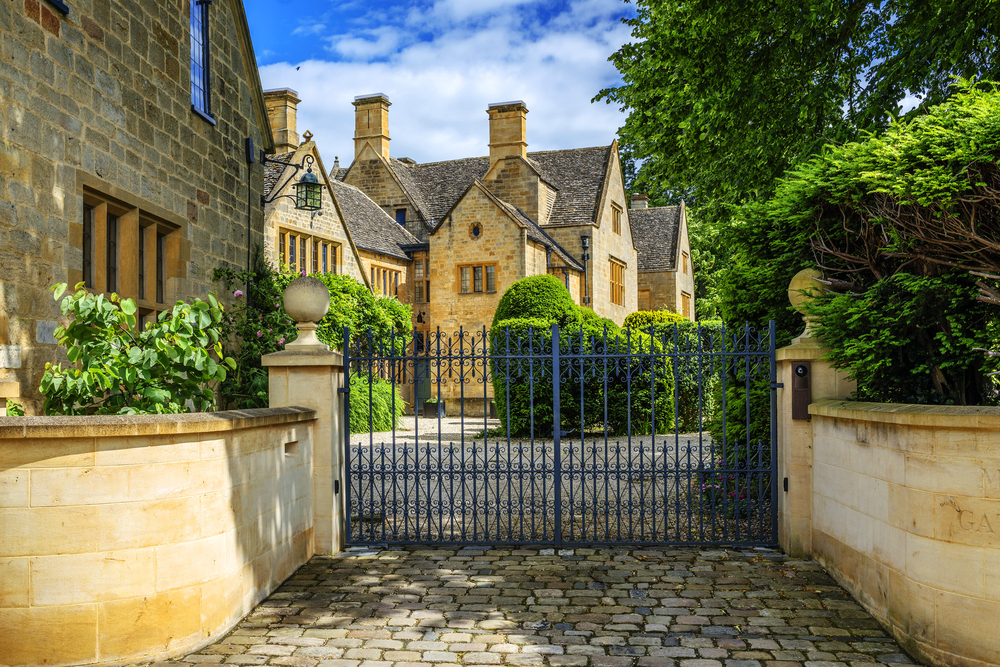
Many high-value-home owners are unknowingly underinsured by six figures. Here’s why rebuild cost and market value are very different things — and what you should do about it.
If you own a substantial property — whether a Georgian townhouse, a converted barn, a modern architect-designed home, or a listed country house — you may be carrying a level of risk you are entirely unaware of. It is one of the most common and costly mistakes in property insurance: confusing your home’s market value with what it would actually cost to rebuild it.
These figures can differ by hundreds of thousands of pounds. And in the event of a major claim — fire, flood, structural collapse — it is the rebuild cost that matters. Not what your home sold for. Not what Rightmove says it is worth. Not what you paid for it.
Underinsurance is not just a technicality. In a total loss scenario, it is the difference between a full recovery and a financial catastrophe.
Underinsurance affects all property types, but high-value and architecturally distinctive homes face a uniquely acute version of the problem. Standard insurance platforms and price comparison websites apply broad, generic rebuild calculators — tools designed for ordinary three-bedroom semis, not a period farmhouse with handmade brick, original lime plaster, and oak-framed outbuildings.
The factors that make your home desirable — its age, its craftsmanship, its materials, its planning restrictions — are often exactly the factors that make it expensive to rebuild. A listed building, for example, may require specialist contractors approved by the local planning authority, bespoke materials matched to the original, and an extended timeline that standard policies simply do not price for.
Most buildings insurance policies contain an average clause — sometimes called the condition of average. In plain terms, it means that if your property is underinsured, your insurer will reduce any claim settlement proportionally.
Imagine your home would cost £1,500,000 to rebuild, but you have insured it for £1,000,000 — two thirds of the true value. If you suffer a £300,000 flood claim, the average clause means your insurer may only pay £200,000. You bear the remaining £100,000 yourself — on a claim you thought was fully covered.
For high value homes, where claims are rarely small, the financial exposure from underinsurance is severe. This is not a loophole. It is a contractual mechanism that your insurer is entirely entitled to apply.
The only reliable way to establish the correct sum insured for a high-value or complex property is a formal Reinstatement Cost Assessment (RCA) carried out by a qualified chartered surveyor. This is distinct from a mortgage valuation and entirely different from a market appraisal. It is a detailed, property-specific calculation of what it would cost to demolish, clear, and rebuild your home to its current specification using current labour rates and materials.
The RICS recommends that reinstatement assessments are reviewed every three years as a minimum — and more frequently for properties with significant bespoke features, recent extensions, or listed status. Following several years of elevated construction cost inflation, many assessments completed before 2022 are now materially out of date.
As specialist high-value home insurance brokers, we work with clients who often discover — for the first time — that their buildings insurance is carrying a significant gap. Our role is not simply to place cover; it is to ensure that cover is adequate, appropriate, and structured to respond properly when it matters most.
As part of our service, we have arranged preferential access to professional reinstatement cost assessments through two of the leading firms in this field:
Both firms are specialists in reinstatement valuations for high-value, heritage, and architecturally complex residential properties. Our clients benefit from discounted survey rates — meaning that getting this right costs less than you might expect, and considerably less than the alternative.
Once an accurate rebuild figure is established, we place your cover with insurers who understand high-value property — providers with the appetite, expertise, and claims handling capability that your home deserves. That means no generic policies, no hidden average clauses applied to an arbitrary sum, and no unpleasant surprises at the point of claim.
Find Out If Your Home Is Correctly Insured
If your buildings insurance has not been reviewed against a professional reinstatement assessment in the last three years — or if your property has changed significantly since the policy was arranged — we would encourage you to speak with us. We will review your current arrangements, identify any gaps, and where appropriate connect you with a specialist surveyor at a preferential rate.
Contact us today to arrange a no-obligation review of your buildings insurance.